
Affiliate disclosure: This guide is free advice. A few optional mat/band search links are affiliate links — if you buy through them, we may earn a commission at no extra cost to you.
Apartment fitness fails for a social reason as often as a physical one: nobody wants a noise complaint taped to the door. This guide covers how to work out in an apartment without bothering neighbors — practical noise and vibration tips, better training hours, mat advice, and which moves to skip entirely.
You do not need to quit training. You need a quieter playbook. Start with no-jump programming like our 15-minute no-jump home workout or the longer 20-minute quiet full-body session, then layer the habits below.
What actually bothers neighbors
- Impact vibration: Jumping, landing from plyometrics, and heavy heel stomps travel through joists.
- Dropped objects: Dumbbells, kettlebells, and plates hitting the floor are unmistakable.
- Repetitive thumps: Rope slamming, burpees, and jump-rope beats create a rhythm people notice through ceilings.
- Odd hours: The same soft march at 6:30 a.m. feels louder than at 11:00 a.m.
- Secondary noise: Blasting speakers, slamming door-anchor setups, or dragging benches across hardwood.
Breathing hard is fine. Music with a polite volume is fine. Turning your living room into a CrossFit box is how leases get awkward.
Best times to train in an apartment
| Time window | Neighbor risk | Notes |
|---|---|---|
| Mid-morning (after ~9 a.m.) | Lower | Great default for strength circuits |
| Late afternoon / early evening | Moderate | OK if feet stay soft; avoid jump work |
| Early morning (before ~8 a.m.) | Higher | Stick to floor mobility, bands, or leave the building for a walk |
| Late night | Highest | Stretching and desk mobility only; skip marches if floors transmit |
When in doubt, match building culture. Some neighbors work nights; a polite conversation beats a formal complaint.
Mat and flooring tactics
- Use a thicker mat on hardwood. Half-inch-style exercise mats cushion knees and slightly soften contact noise for floor work. Compare options in our yoga mats under $50 guide, or browse extra-thick yoga mats.
- Keep the workout on the mat. Define a footprint so you are not pacing the whole apartment.
- Avoid stacking slippery mats that cause catch-steps and stomps.
- Felt pads under furniture stop chair scoots during sit-to-stands.
- Never assume carpet equals free rein. Impact still travels; jumping remains a bad idea.
Light affiliate note: mat and band search links may earn us a commission at no extra cost to you if you buy through them.
Moves to skip (apartment ban list)
- Jump squats, tuck jumps, box jumps
- Burpees with a jump (and most burpee variations that slam the floor)
- Jumping jacks and high-impact jump rope
- Dropping dumbbells or barbell plates for effect
- Medicine-ball slams
- Sprinting in place with aggressive stomps
- Heavy battle-rope waves on thin floors
Replace them with controlled tempo strength, elevated push-ups, glute bridges, dead bugs, soft marches, and band rows. Resistance bands stay nearly silent when you avoid snap-backs — browse band sets if you need progressive load without metal clanks.
Quiet exercise swaps
| Instead of… | Try… |
|---|---|
| Jump squats | Slow sit-to-stands or squat holds |
| Burpees | Elevated push-up + step-back plank (no hop) |
| Jump rope | Soft march intervals or shadow rope with quiet feet |
| Running in place | Outdoor walk or low-speed walking pad used considerately |
| Heavy barbell drops | Bands, controlled dumbbells set down softly, or bodyweight progressions |
Technique rules that cut vibration
- Soft feet. Think “quiet stairs,” not “athlete stomp.”
- Slow eccentrics. Three seconds down on squats and hinges reduces impact without reducing work.
- Place, do not drop. Weights kiss the floor; they do not announce themselves.
- Short rests, not frantic pace. Density raises heart rate; panic footwork raises complaints.
- Stabilize your props. A sliding chair thumps more than a planted one.
Cardio options that keep the peace
- Outdoor walking — still the gold standard for apartments
- No-jump circuits — indoor cardio without plyometrics
- Desk mobility breaks — see our 10-minute desk break mobility routine
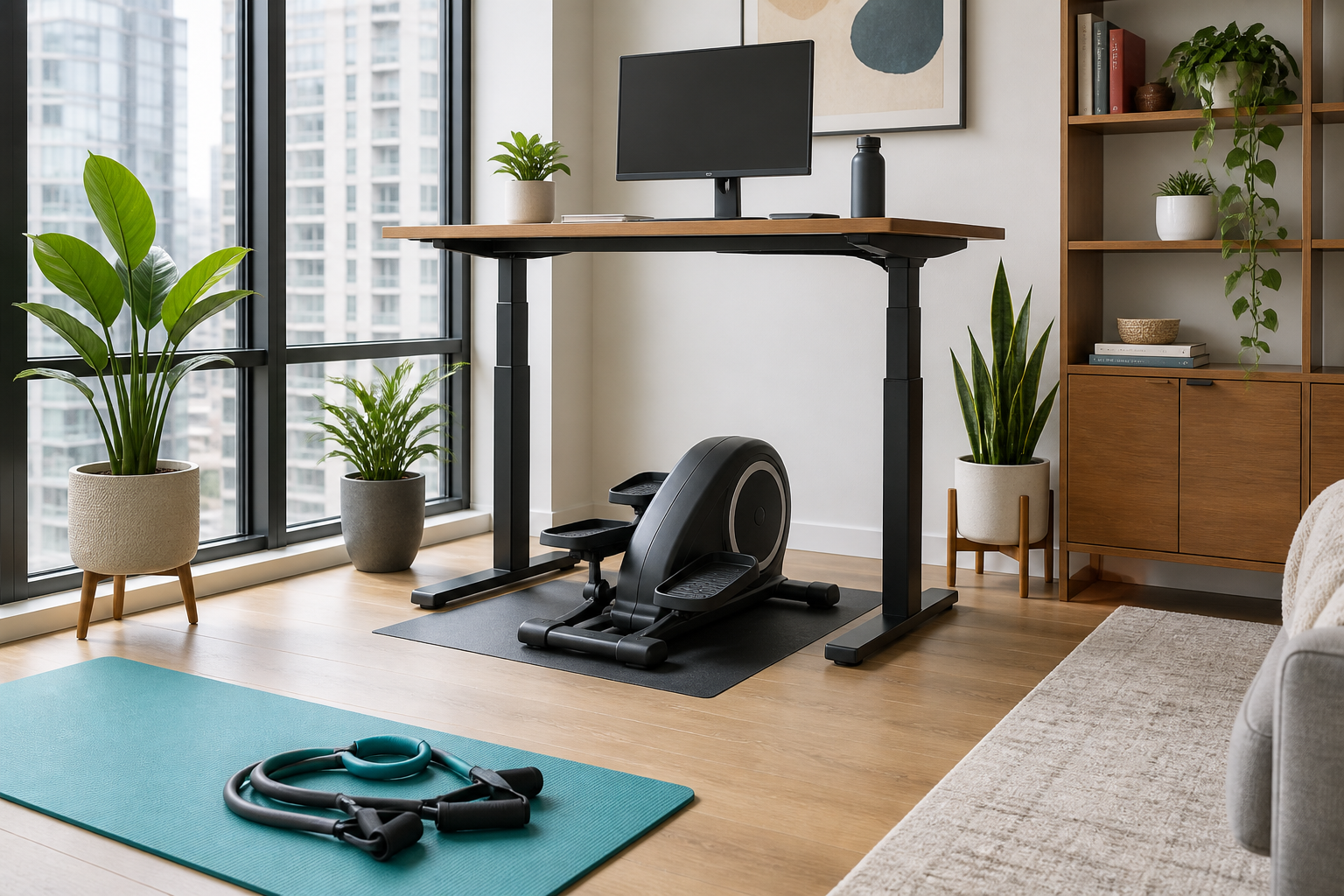
- Under-desk ellipticals — seated, low impact; compare models under $150
- Walking pads / foldable treadmills — useful but not silent; read walking pad vs foldable treadmill and keep speeds considerate
Social skills beat gadgets
- If you already got a complaint, apologize once, adjust hours, and show the change.
- Offer a rough training window so neighbors know when to expect light noise.
- Do not argue physics through a text thread — change the workout.
- If your building has quiet hours in the lease, treat them as hard rules.
Starter kit for quiet training
You do not need a full gym. A thick mat, a band set, and a no-jump plan cover most goals. For a budget checklist, use the apartment gym starter kit under $100.
FAQ
Can downstairs neighbors hear bodyweight workouts?
They can hear impact. Slow, controlled floor work is usually fine; jumping and stomping are not.
Is a treadmill OK in an apartment?
Sometimes, with daytime hours, moderate speeds, and realistic expectations. Walking pads and foldables still hum and transmit footfall. Measure noise tolerance honestly.
What if I live on the top floor?
You reduce one complaint vector, but side neighbors and shared walls still hear music and dropped weights. Keep the ban list.
Are early-morning workouts ever OK?
Prefer mobility, stretching, bands, or leaving for a walk. Save denser circuits for later.
Will a thick mat solve everything?
No. It helps comfort and softens some contact. Exercise selection and timing matter more.
Related guides
- 15-Minute No-Jump Home Workout
- 20-Minute Quiet Full-Body Apartment Workout
- Best Yoga Mats for Apartments Under $50
- Apartment Gym Starter Kit Under $100
- Best Foldable Treadmills Under $400
Bottom line
Train smarter, not louder. Skip jumps and drops, use a thicker mat, choose considerate hours, and follow no-jump circuits. Your fitness can improve without turning the ceiling below you into a drum.